How Should Long-Term Compensation Plans Be Accounted for Under US GAAP?
Under ASC 710-10-25-9, compensation cost for benefit plans with awards tied to service periods longer than 12 months should be accrued over the service period in a systematic and rational manner. The selected attribution method should be applied consistently and should ensure that:
Compensation expense is recognized over the requisite service period, which is the period during which an employee must continue providing services to earn the compensation.
Cumulative compensation cost recognized in each period is at least equal to the cumulative vested portion of the award, meaning the nonforfeitable amount earned to date.
In practice, entities typically apply one of the following accounting policies:
Award-level straight-line attribution
Tranche-level accelerated attribution
Each method results in a different cumulative expense recognition pattern. The illustration below compares both methods using a multi-year vesting structure.
Case Study
Scenario
Employees receive cash awards under a compensation plan with the following vesting schedule: 75% in year 2, 20% in year 3, and 5% in year 4, as shown below.

How should the reporting entity recognize the related compensation expense? It depends on the selected accounting policy.
Straight-line Attribution Policy
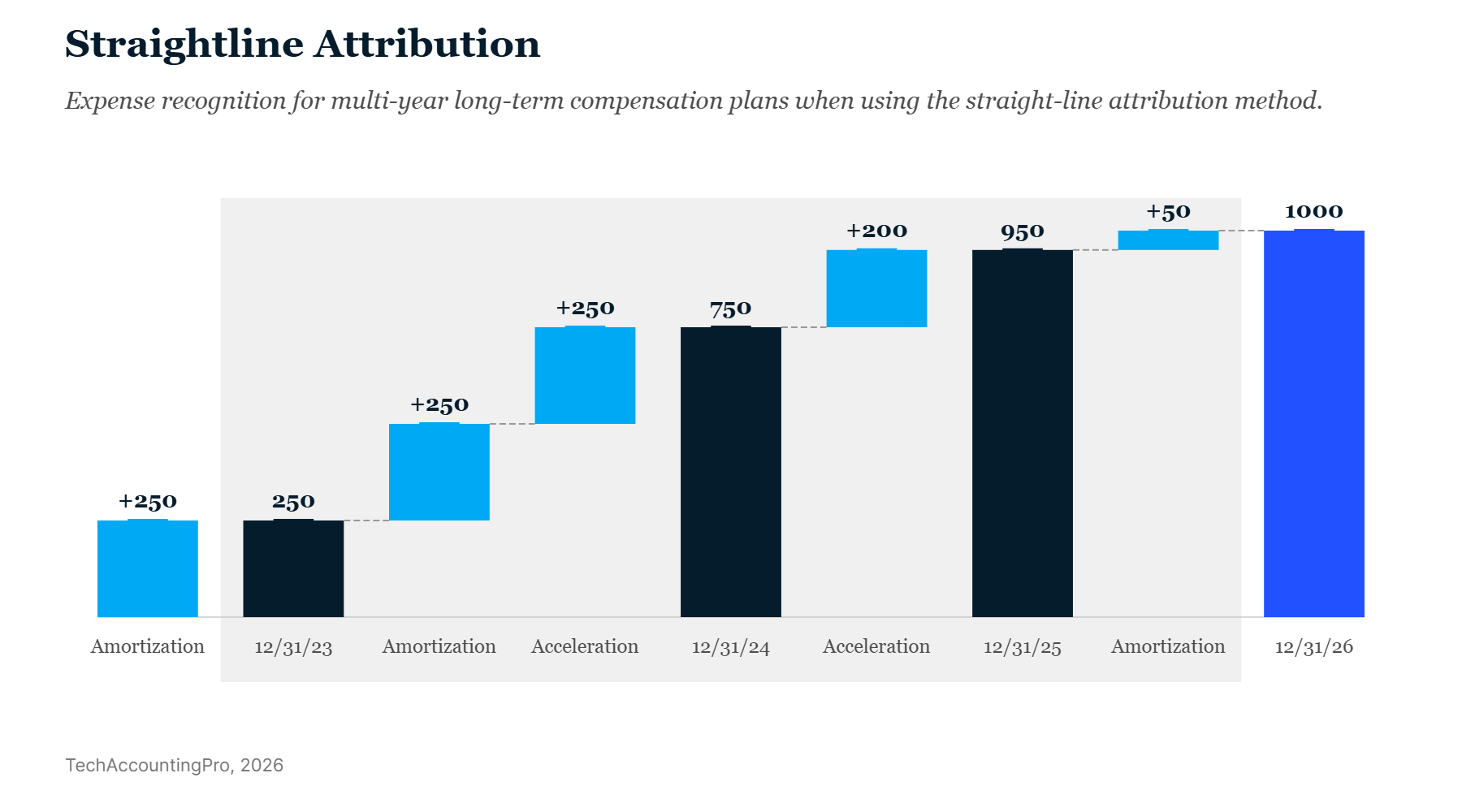
Under this policy, the full value of the award is recognized on a straight-line basis over the four-year requisite service period. As a result, 25% of the total award is recognized as compensation expense in each year of the four-year vesting period.

The chart below summarizes the financial effects of straight-line attribution by year:
Accelerated Attribution Policy
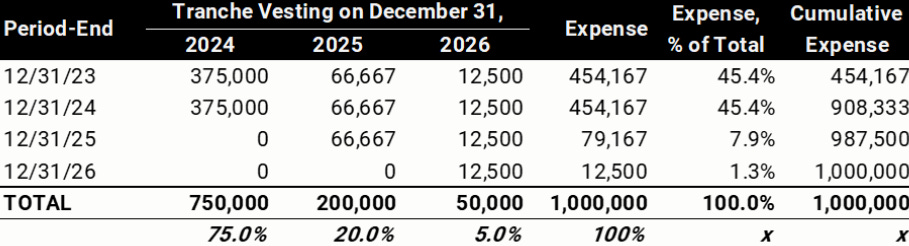
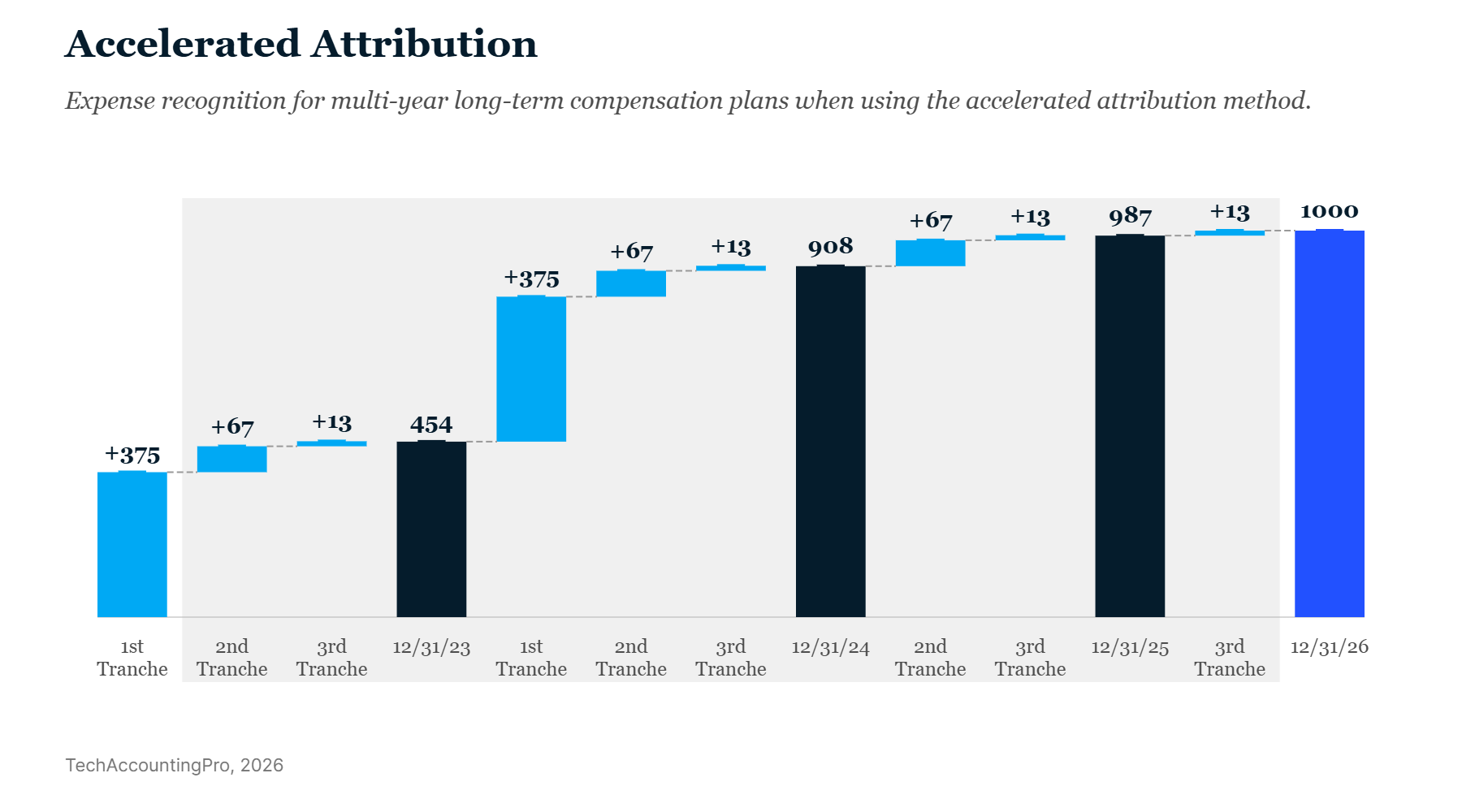
Under this policy, entities recognize compensation cost separately for each tranche of the award based on its individual vesting date. In the first year, compensation cost is calculated by tranche as follows:
50% of the tranche that vests in 2024, which vests 2 years after the award date
33% of the tranche that vests in 2025, which vests 3 years after the award date
25% of the tranche that vests in 2026, which vests 4 years after the award date
The chart below summarizes the financial effects of accelerated attribution for each year when the expense is recorded:
Straightline vs. Accelerated Attribution
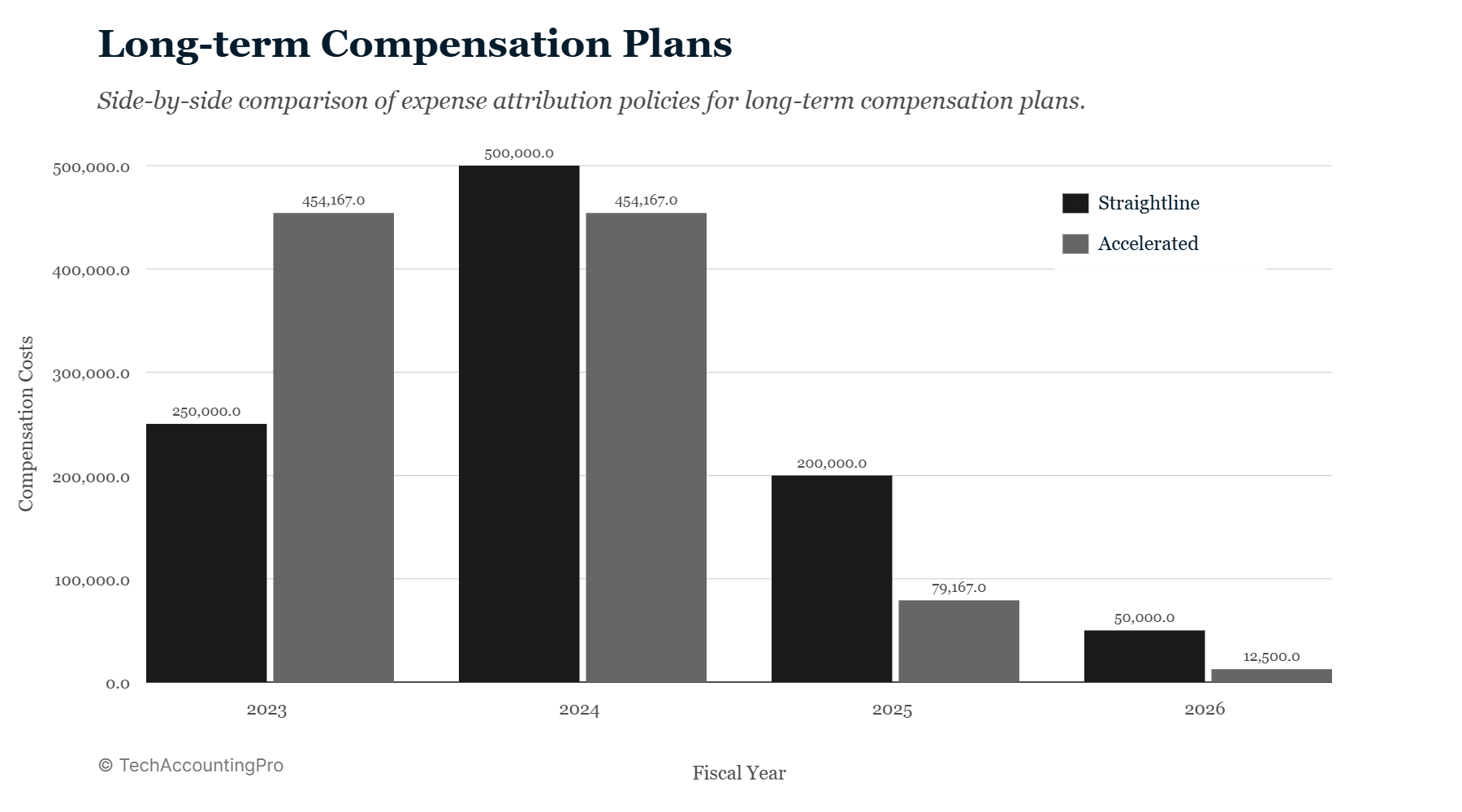
The chart below compares the results of each policy election in the case study above.
You can find the Google Sheet with the calculations here.
For additional discussion of token compensation plans, see the related post below:
Token Compensation Accounting

I recently spoke with several technical accounting professionals about how they account for various forms of token compensation and was surprised by the diversity of approaches. Today, we will take a detailed look at the accounting for token compensation.