Introduction
This article examines how different web3 protocol development companies (the “DevCo”) work and answer the following questions:
How does DevCo create value for its shareholders?
What sustainable business models are used by different DevCos?
What impact does a use of different business models have on accounting?
Background
A defining characteristic of most DevCos is the absence of traditional revenue, especially in early stages. The core team initially raises capital privately. That capital is deployed into initial protocol development and ecosystem building. Once the protocol is live and tested, additional funding is typically raised during a token generation event, often through a substantial allocation of tokens to the DevCo’s treasury. Additional capital may come from public token sales or from crypto-focused VCs.
From that point onward, DevCo’s management focuses on growing the ecosystem and maintaining the protocol. Growth is driven by adoption activated through marketing and partnerships, and sustained through transparent protocol governance, support of other builders, and continuous maintenance and development. Growth often translates into appreciation of assets held in the company’s treasury.
Once a network becomes operational, it begins generating real economic value through transaction fees and charges for consumption of protocol utility. However, that value does not accrue to the DevCo directly. It is ecosystem revenue, distributed to validators, operators, delegators, and other participants through protocol mechanisms. Ecosystem revenue reflects protocol value creation, but it does not, by itself, characterize the value of an equity interest in the DevCo.
This helps explain why so many projects appear to operate without traditional revenue for extended periods of time. KuCoin Exchange recently highlighted that 99% of web3 projects sustain themselves primarily through token funding and investor capital rather than operating cash flows. This observation often draws criticism, but from another perspective it reflects a deliberate adoption-first strategy. Teams and investors are underwriting scale and engagement today, with the belief that durable value emerges later. Whether this will play out the same way it did in earlier technology cycles remains uncertain, but the belief itself is understandable.
In practice, DevCos monetize their position through a broader set of cash flow and quasi-cash flow mechanisms than is often modeled. Common sources include:
Staking rewards
Initial token allocations
Token sales and structured unlocks
Service fees paid by protocol
Governance-related income
Commissions from incubated or managed ecosystem projects
Investment income
Derivative or hedging arrangements
How these mechanisms translate into sustainable value depends on the underlying business model the DevCo chooses to pursue.
Four sustainability models and their economic logic
Across projects and conversations, four models consistently emerge. Each reflects a different strategic posture and leads to different economic and accounting outcomes.
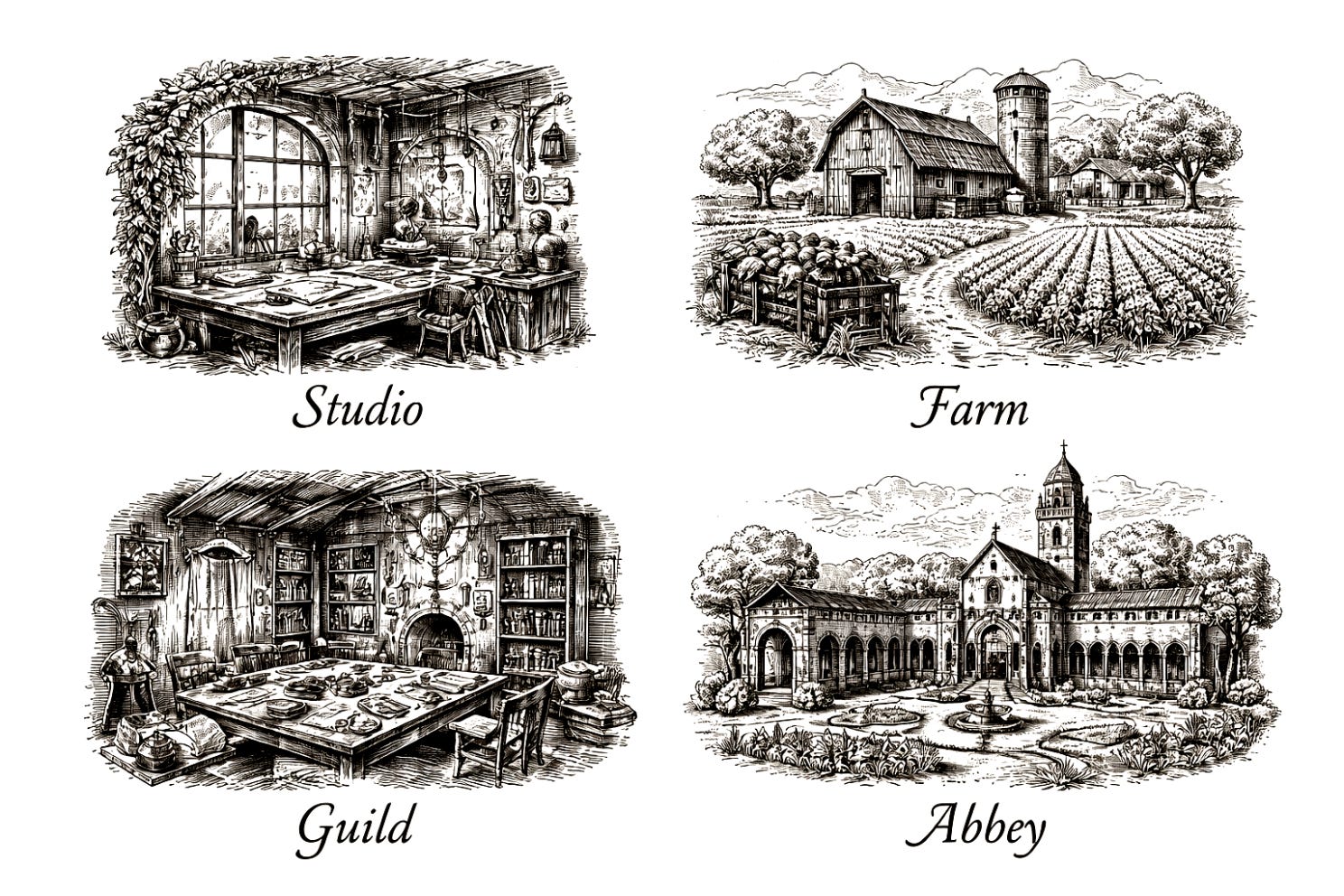
1) Studio (Diversified Software Development Model)
In this model, the DevCo positions itself primarily as a software development organization. The value creation is driven by engineering services, infrastructure development, and long-term partnerships. Growth comes from scaling these capabilities across ecosystems.
From an accounting perspective, token presales are best understood as financing arrangements rather than operating revenue. Although classification depends on contractual rights and restrictions embedded in the token instruments, sales of tokens from treasury are generally more appropriately treated as non-operating asset sales, separate from core software development services.
Examples: Polygon Labs , Offchain Labs , Consensys
2) Farm (Build-and-Rotate Model)
Here, the DevCo repeatedly initiates new protocols, invests heavily in adoption and engagement, and treats tokens as the primary economic output of its activities, similar to an inventory build-and-monetize cycle.
In this structure, token investors are customers of the DevCo, and the performance obligation is to deliver tokens rather than provide services. Token presales function as prepayments for future token deliveries and may include a significant financing component. Once tokens are live and delivered as part of ordinary activities, token sales can align with operating revenue. However, all facts and circumstances must be evaluated, particularly whether tokens are outputs of ordinary activities or passive treasury assets.
Examples: Mysten Labs
3) Guild (Network Revenue Sharing Model)
In this approach, the DevCo’s value creation is explicitly tied to network outcomes rather than treasury appreciation. The organization participates in ecosystem economics through revenue-sharing mechanisms. This might be implemented as:
Direct fee distribution, or
Indirect fee distribution (Token buybacks)
This model creates strong alignment between DevCo value and protocol utility, adoption, and ecosystem growth.
The success of this model depends on the primary driver of value creation which can include:
Ecosystem customer loyalty,
Unbeatable technological advantage of the protocol, or
Price leadership.
From an accounting perspective, both token presales and token sales are generally viewed as financing arrangements representing the sale of future network revenue. Customers are end users of the protocol, and the DevCo’s performance obligation relates to facilitating protocol services through infrastructure management rather than selling tokens as products or acting as a validator or operator.
Whether network income is operating revenue or income from a collaborative arrangement depends on the DevCo’s role and all relevant facts and circumstances.
Examples: Virtuals Protocol , Balancer , Nova Labs
4) Abbey (Endowment Treasury Model)
This model emphasizes long-term mission, governance independence, and sustainability. Core activities are supported by a diversified treasury designed to generate yield sufficient to fund operations and ecosystem development indefinitely.
Here, token presales function as financing arrangements. Token sales from treasury are treated as non-operating asset sales, analogous to portfolio management rather than operating performance. Other yield generated from treasury assets is passive investment income. This structure allows leadership to prioritize long-term network health and mission alignment, even when those choices may be detrimental in the short term. A natural question in this model is whether any income generated can be classified as operating rather than investing in nature.
Examples: Polkadot , Filecoin Labs , Ethereum , Solana Labs
Conclusion
Strategy determines economics, and economics should determine accounting treatment, not the opposite. Attempts to impose a single revenue narrative across fundamentally different models tend to obscure how value is actually created and sustained.
As the industry matures, more efforts are emerging to coordinate the interests of equity holders and token holders within coherent frameworks, making these structures more legible from a governance, funding, and value creation perspective. One such effort is the STAMP framework recently introduced by Colosseum, which will be explored in more detail in a future publication